Aging in Place in Raleigh: How to Make Your Home Safer Without Making It Look Like a Hospital
Most people who need aging-in-place changes wait too long to make them. Not because of the money, and not because they can’t find a contractor. They wait because of a picture in their head — white plastic grab bars on white walls, a fold-down shower seat that looks like it came from a hospital supply catalog, and fluorescent light over beige everything. That image says “someone old and sick lives here,” and almost nobody wants it in their home.
So they put it off. They keep using the step-over tub. They keep taking the stairs to the only full bathroom. And then a fall makes the decision for them — usually on a rushed timeline, under stress, at a worse price. The delay is the real danger, and the thing driving the delay is a design problem, not a safety one.
Here’s the part most people don’t realize: aging-in-place design doesn’t have to look like aging-in-place design. Done well, you won’t be able to tell. The house just looks like a nice house that happens to be easy to live in — for a 35-year-old with a baby on one hip, for a recovering knee, and for the same homeowner twenty years from now.
What “Aging in Place” Actually Means
Aging in place simply means staying in your own home safely and comfortably as your needs change, instead of moving to assisted living. It’s overwhelmingly what people want — to stay in the home and neighborhood they know.
The design language behind it is called universal design: features that work for everyone, at every age and ability, without calling attention to themselves. A curbless shower is safer for an unsteady adult and easier for a toddler and it looks sleek and modern. Lever door handles help arthritic hands and also the person carrying laundry with both arms full. The best accessibility is invisible — it reads as good design, and it quietly does a second job.
Aging in Place Doesn’t Have to Look Institutional
This is the objection worth spending real time on, because it’s the one that keeps people in unsafe homes. The fear is legitimate — the old version of this work genuinely did look clinical. But the products and the design thinking have moved a long way.
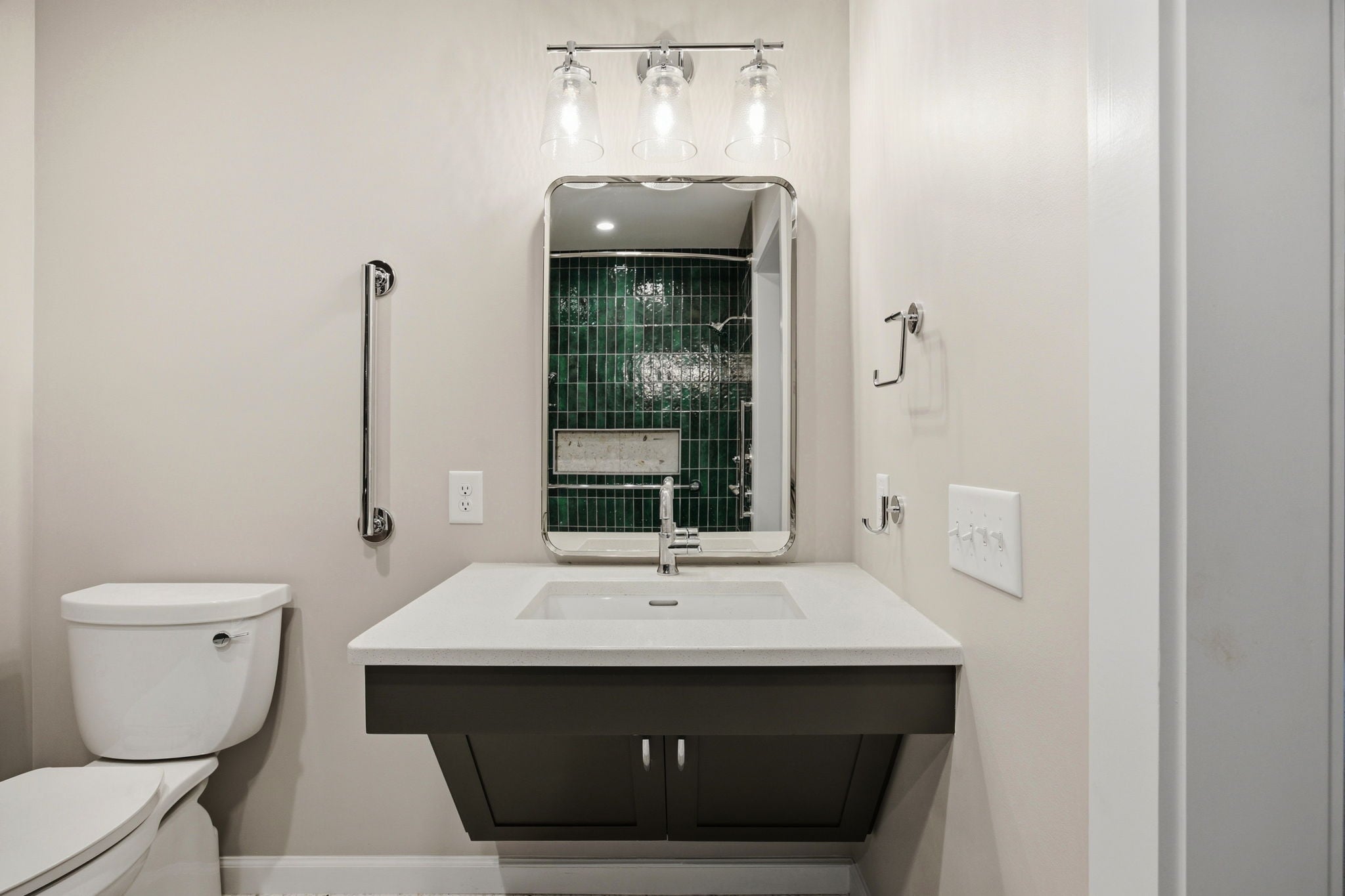
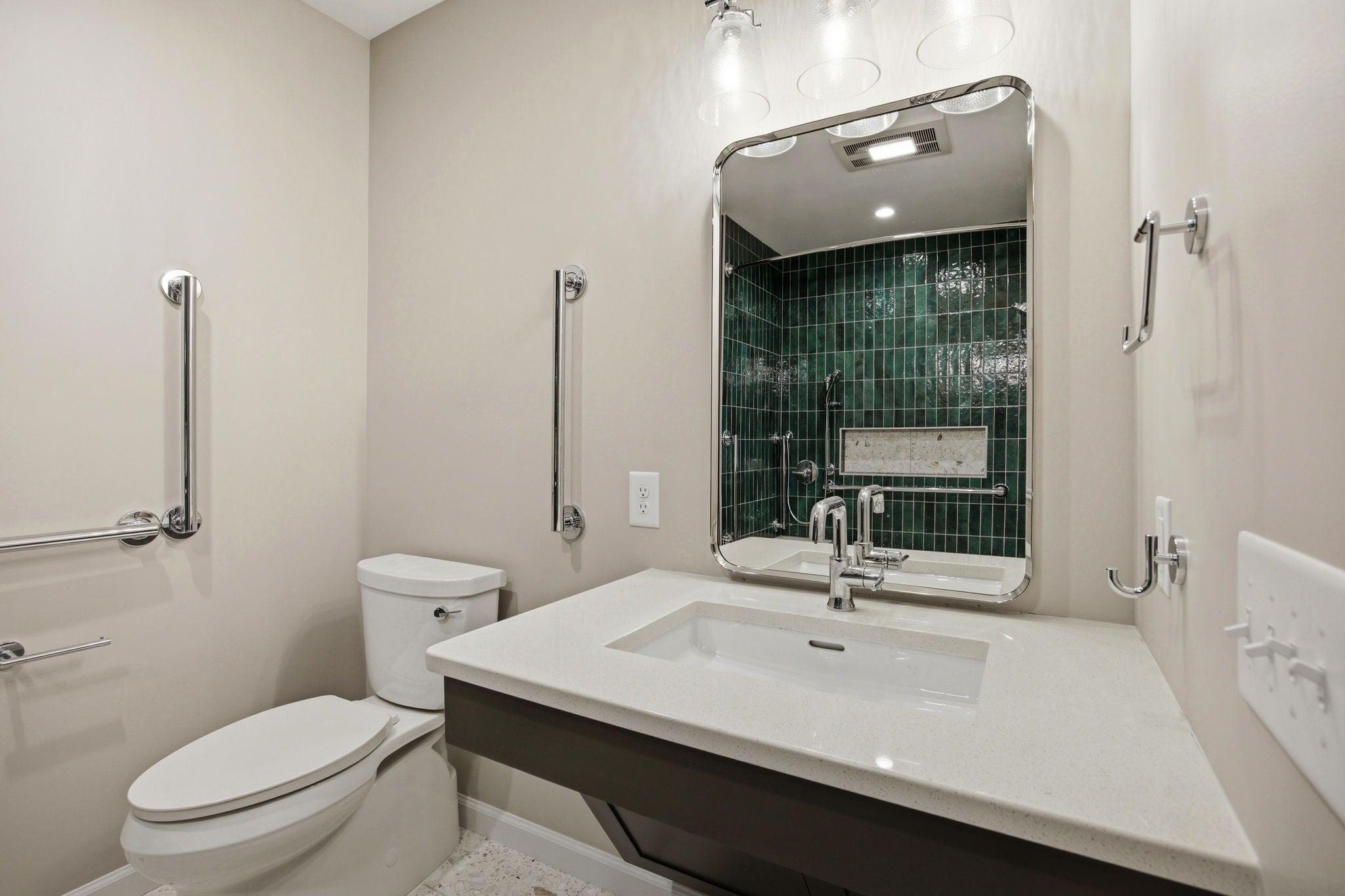
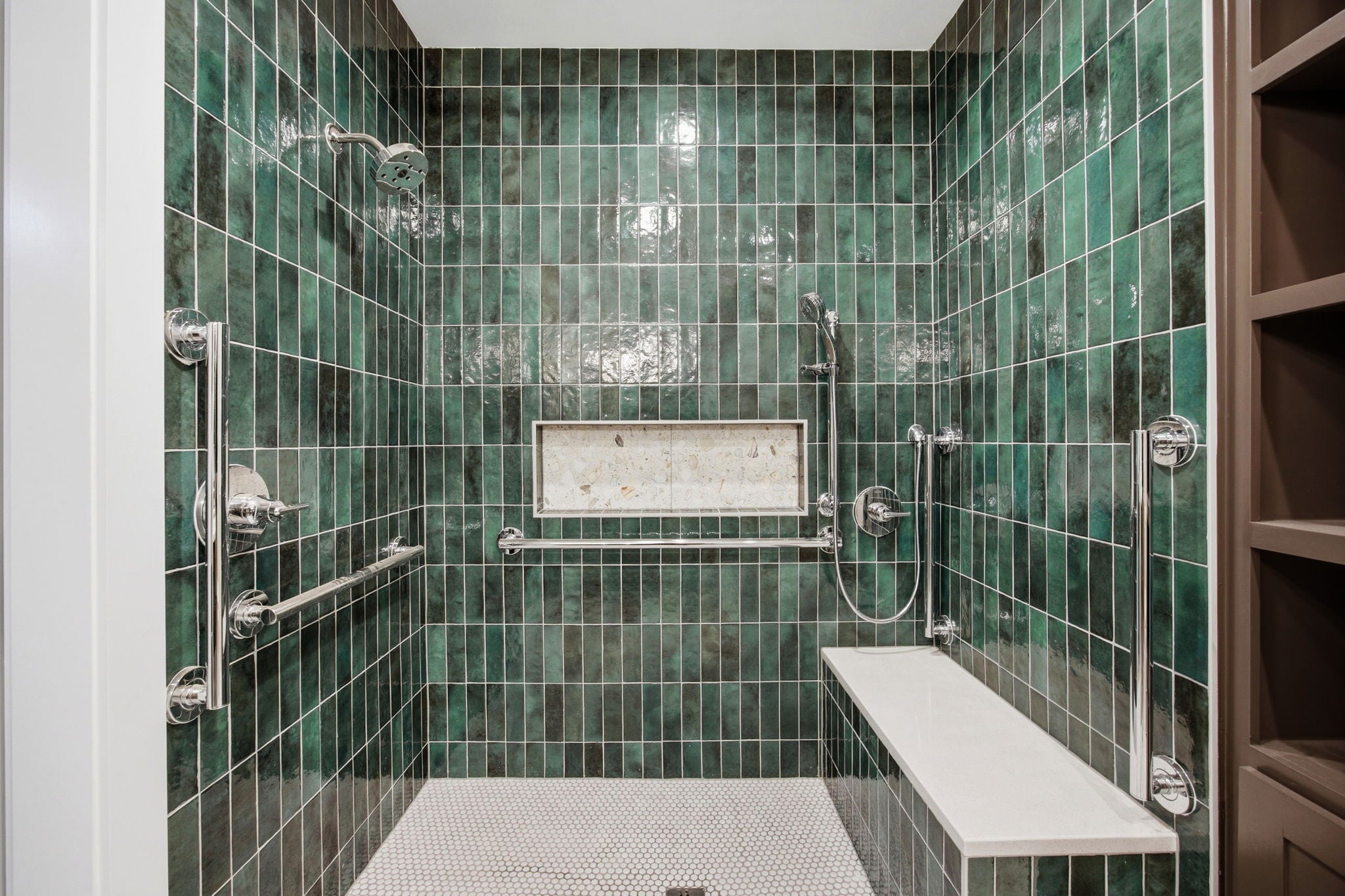
- Grab bars now come in the same finishes as your faucets — matte black, brushed nickel, aged brass — and some double as towel bars or shower shelves. Placed right, they read as fixtures, not medical equipment.
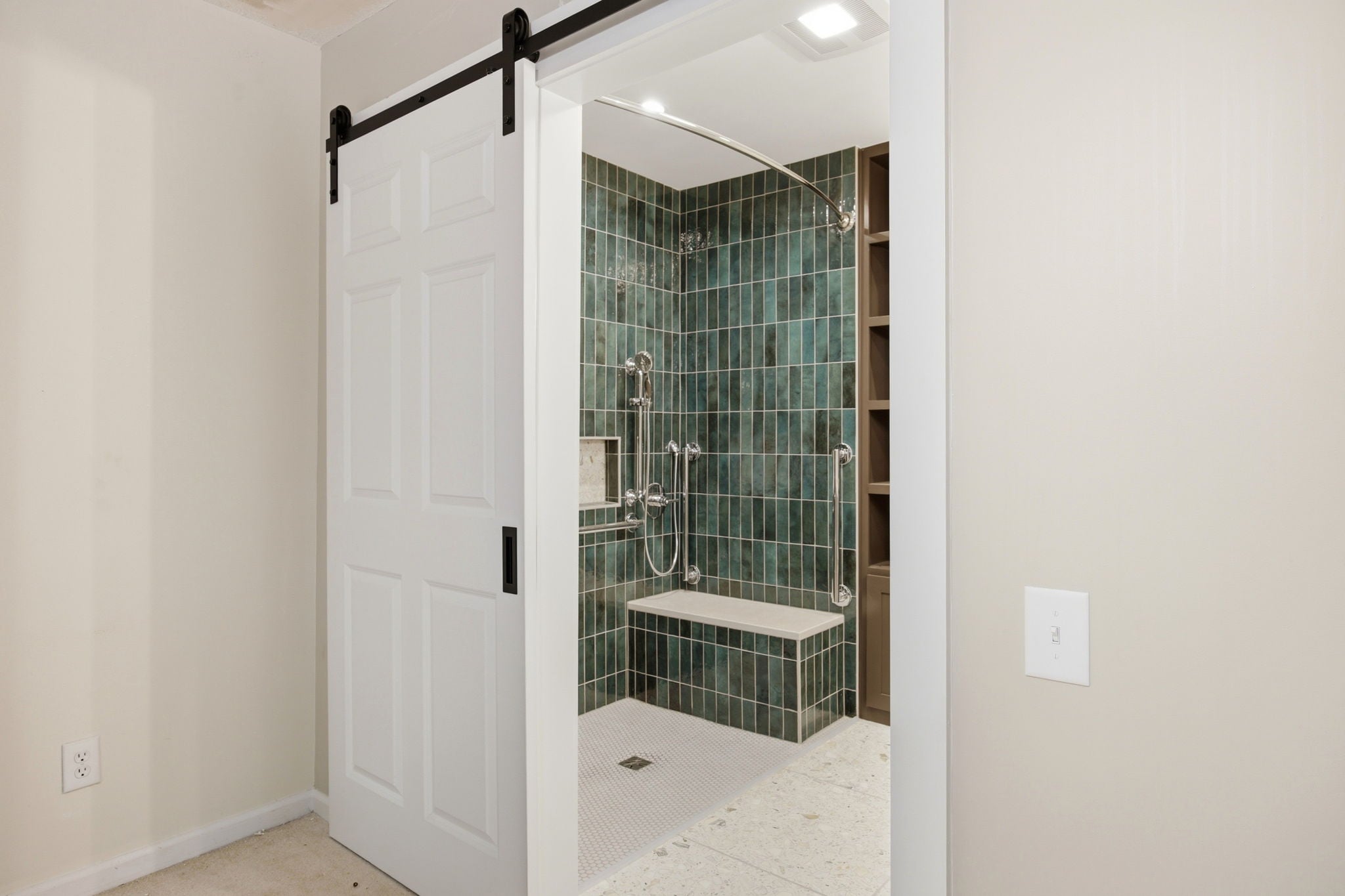
- Curbless, zero-threshold showers are one of the most requested features in new luxury bathrooms — by people with no accessibility need at all — because they look clean and open and are easier to clean.
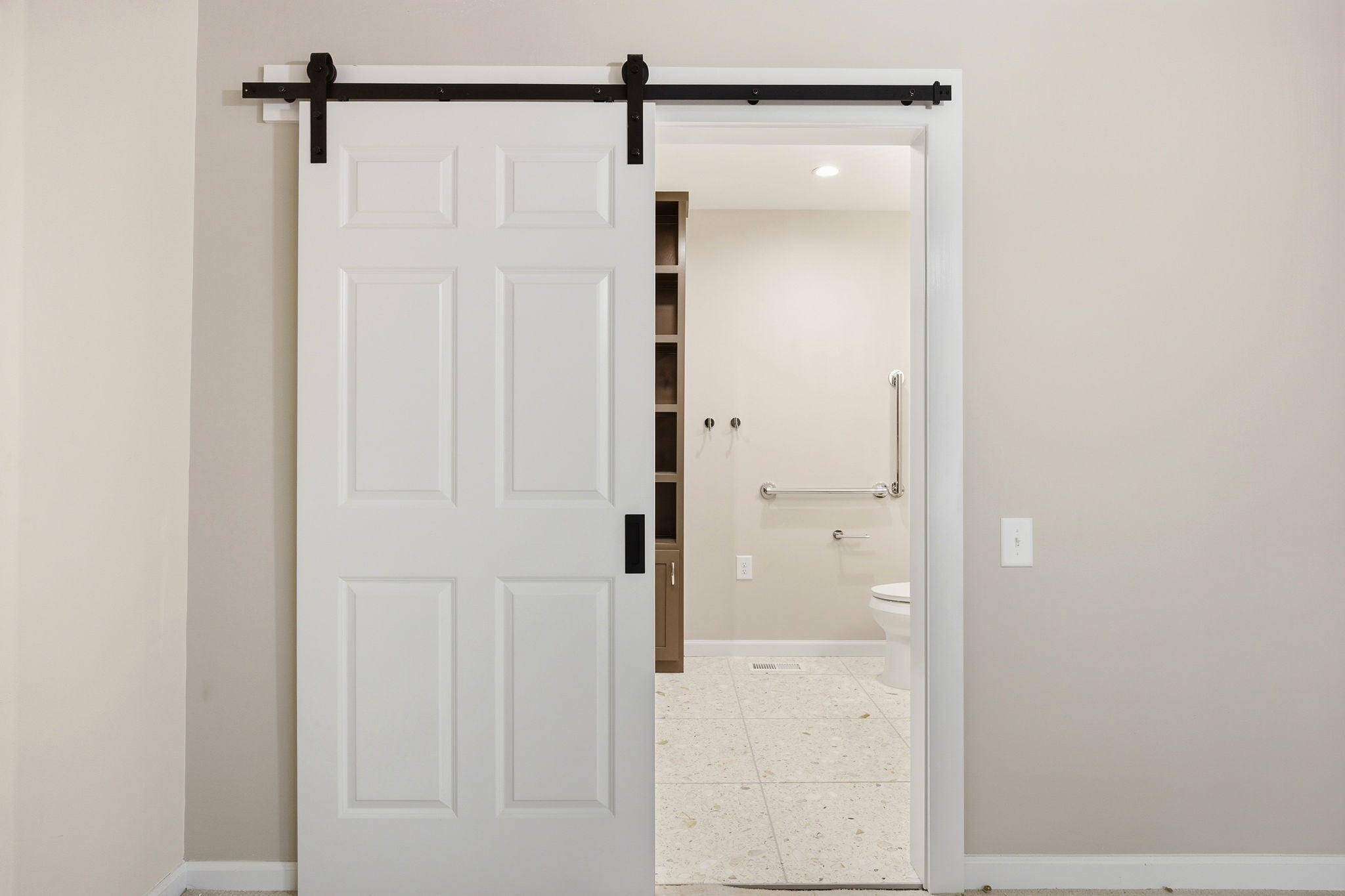
- Wider doorways and hallways just read as a more spacious, open home.
- Comfort-height toilets and vanities, better lighting, and slip-resistant floors are now standard in high-end remodels regardless of the homeowner’s age.
None of that says “hospital.” It says “well-built home.” The skill is in knowing which features to use, where to place them, and how to make them disappear into the design — which is exactly what a specialist does differently from a general handyman.
Where to Start: The Bathroom, Then the First Floor
If you do nothing else, start with the bathroom. It’s where the most falls happen and where accessibility improvements make the biggest difference, which is why it’s the most common first project. A bathroom remodel built around a curbless shower, a bench, well-placed grab bars, and better lighting removes the single riskiest room in most homes.
The next priority is getting the essentials onto one level. A home where you can live entirely on the first floor — a full bathroom, a bedroom or flexible room, laundry, and a step-free entry — is a home you can stay in for decades. That often means rethinking existing space or adding on, which is where a whole home renovation or an owner’s suite on the main floor comes in. The kitchen is the third area, where pull-out shelves, varied counter heights, and easy-reach controls make daily tasks easier for everyone in the house.
This Is Also a Multi-Generational Story
Aging in place isn’t only about a homeowner planning for their own future. Increasingly in the Triangle, it’s about families bringing an aging parent under one roof — which means one home has to work for two or three generations at once.
We’ve written a lot about this, because it’s one of the most common conversations we have. If that’s your situation, these are worth reading: preparing for multi-generational living, designing for two generations, the benefits of multi-generational living, and how to manage the costs and challenges of that kind of renovation.
Why a CAPS-Certified, Local Builder Matters Here
A lot of contractors will install a grab bar if you ask. Far fewer are trained to look at your whole home and your future needs, then prioritize the changes that matter most. That’s what the Certified Aging-in-Place Specialist (CAPS) designation from the National Association of Home Builders is for — it covers the technical, design, and communication skills specific to this work. Blue Ribbon is CAPS certified, and it’s the right question to ask any contractor you’re considering.
Being local and established matters just as much. Blue Ribbon Residential Construction has remodeled homes across the Raleigh-Triangle area for over 30 years, and many homes here — older brick ranches, split-levels, two-story builds with the primary bedroom upstairs — weren’t designed with accessibility in mind. Knowing the housing stock is half the job. You can see accessible work we’ve done in our accessible project portfolio.
Plan Before You Need It
The best aging-in-place work happens before there’s an emergency, folded into a remodel you were going to do anyway. Redoing a bathroom in your fifties? Build in the blocking behind the walls for future grab bars now, even if you don’t install them yet — it costs almost nothing during a remodel and a great deal to retrofit later. This is the same invest-where-it’s-hard-to-change thinking we wrote about in our post on timeless design versus trends, and it’s closely tied to which renovations actually pay off in our 40s, 50s, and beyond.
Aging in Place: Common Questions
Does aging-in-place design make my home look institutional?
No — not if it’s done well. Modern accessible features (curbless showers, lever handles, designer-finish grab bars, better lighting, wider doorways) are common in high-end remodels and read as good design, not medical equipment. The whole point of universal design is that you can’t tell.
What’s the first thing I should do to make a home safer for aging in place?
The bathroom, in almost every case. It’s where the most falls happen and where a curbless shower, grab bars, a bench, and improved lighting deliver the biggest safety gain. From there, the priority is getting a full bathroom and a bedroom onto the main floor.
Do I need a special contractor, or will any remodeler do?
Any remodeler can install a fixture, but a Certified Aging-in-Place Specialist (CAPS) is trained to assess your whole home and your future needs and design changes that are both safe and attractive. In the Triangle, CAPS certification has become common among quality remodelers — it’s a fair thing to require.
Should I make these changes before I actually need them?
Yes. It’s far cheaper and less disruptive to build accessibility into a remodel you’re already doing than to retrofit under pressure after a fall. At minimum, add wall blocking for future grab bars during any bathroom project.
Does aging-in-place remodeling add or hurt home value?
Done as universal design, it helps. Step-free entries, open layouts, and main-floor living appeal to a broad range of buyers, not just older ones — which is exactly why these features show up in new construction aimed at every age group.
Aging-in-Place Remodeling in Raleigh and the Triangle
Blue Ribbon Residential Construction is a CAPS-certified, design-build remodeler serving homeowners in Raleigh, Southern Wake Forest, Morrisville, Cary, Apex, Holly Springs, and generally within 12 miles of the NC State Fairgrounds. For over 30 years, we’ve helped families make their homes safer, more accessible, and — just as important — still beautiful. You can learn more on our aging-in-place renovations page.
Thinking ahead about staying in your home, or making it work for a parent moving in? Request a free consultation or call us at (919) 852-3700. We’ll walk your home with you and show you what’s possible — safe, accessible, and designed so no one would ever guess it was.
CATEGORIES
RECENT POSTS
